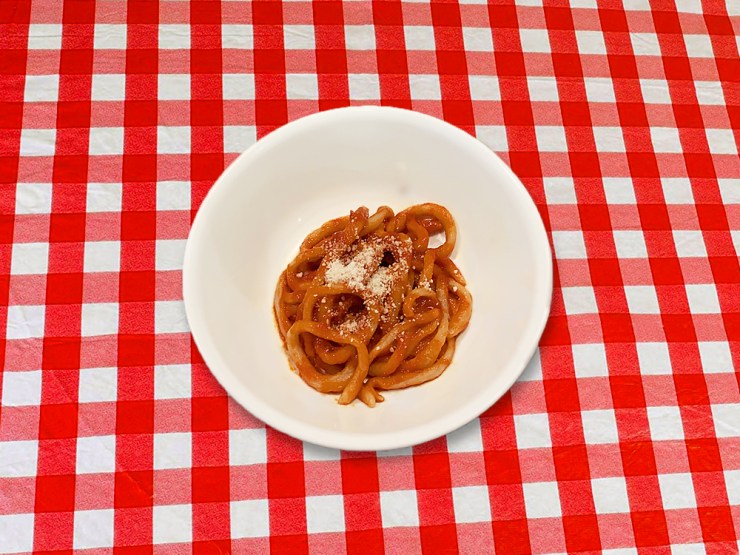

Picture yourself in Siena, walking along the cobblestoned Piazza del Campo, you swiftly brush past students, locals, and tourists to find something comforting and delicious to eat. An osteria, seemingly tucked away in the middle of the bustling piazza calls to you and you enter. Your meal starts with wine (Tuscan, naturally) and the melodic Italian chattering of local diners basking in their company and their meals. An older man with a leathered, warm smile places a plate of pasta in front of you that you will never forget. Its rustic appearance invites you to indulge in the warm, simple, deliciousness of the silky, handmade pasta.
Pici. Chances are, unless you’ve been to Siena, you haven’t heard of this delicious pasta. A staple dish in the incomparably beautiful Tuscan city, this thick pasta is lovingly hand-rolled resulting in a distinct lack of uniformity in size. Pici can be dressed up in a variety of ways – in a hearty meat-based ragu, in a cheesy and delectable Roman cacio e pepe, or in a spicy, fragrant red aglione sauce.
Traveling to Siena, while arguably well worth it, to taste this edible delight, the best thing about pici is that it is easy to make. The best part? There’s no pasta machine required! An added bonus is that with aglione sauce this dish is also vegan.

Pici all’Aglione (yields roughly 3-4 servings)
Ingredients:
1 1/2 -2 Cups Flour (For best result use semolina, but all purpose is okay too)
1 Cup Room Temp. Water
1 Can Tomatoes (Diced or skinned whole plum)
4 Cloves Garlic
1/2 Teaspoon Pepperoncino/Crushed Red Pepper
1-2 TBSP Olive Oil
Pecorino or Parmesan Cheese (optional, for sprinkling)
Basil (optional garnish)
Instructions:
- First bring together the pasta dough by creating a flour “well” and slowly incorporating room temperature water. To create the well, dump 1 1/2 cups of flour (don’t use all your flour at once!) into a mound on a kitchen surface or in a bowl and create a divot in the middle. Slowly pour the water into the center of the well until a dough forms. Knead dough until it is smooth and silky, you can always incorporate a little more flour or water into the dough if it feels too sticky or dry – the key is not to be heavy-handed.
- Once your dough is smooth, flatten it into a disc and place in clingwrap to rest at room temperature. *I recommend adding a little olive oil to the clingwrap so that the dough does not stick. This step is important so that you have a good texture to your pasta and clingwrap prevents your dough from drying out.
- While dough rests, add olive oil to a sauce pan – I listed 1-2 TBSP, but I usually eyeball this. Crush and mince garlic and add to olive oil to pan with pepperoncino/crushed red pepper. *I recommend 1/2-1 teaspoon of red pepper but depending on how much you like spice you can add a little more or less, though I encourage you to be light handed as too much heat can kill a dish. You can always add some on top at the end.
- Turn heat to medium until the garlic and pepper become fragrant (roughly 2 minutes).
- If you are using plum tomatoes, crush the whole tomatoes. You can also use diced for this recipe, but the plum tomatoes carry much more flavor. Add the tomatoes to your sauce. Allow to cook on medium until sauce starts to bubble then turn to a low heat. Make sure to stir your sauce every so often. I recommend to cook the sauce a total of 45 minutes.
- While sauce cooks, unwrap your pasta dough and place onto a lightly floured surface. With a rolling pin, roll the pasta dough into a sheet approximately 1 centimeter thick. Cut dough into approximately 1 cm wide strips – it’s okay if your strips aren’t totally straight, pici is meant to be imperfectly shaped.
- Time to handroll your pici! There are two traditional methods to do this. The first method (my preferred!) is to roll the dough between the palms of your hands to form a slightly lumpy, long noodle approximately 1/4-1/2 cm in diameter (again, don’t worry about perfection, but keep in mind the pasta will expand significantly when cooked!). The second method is to roll the strips between a lightly floured surface and the palm of your hand. Whichever method works best really comes down to personal preference. Place the finished pici on floured cooking sheets to prevent them from sticking before cooking.
- Fill a large pot with water and add salt (tip, more salt = more flavor!) and place on a high heat until water reaches a rolling boil. Add pici and cook 2-4 minutes until al dente (keep an eye on it as fresh pasta cooks much faster than dry pasta). *Some people may feel inclined to add olive oil to their water to keep the pasta from sticking together – do not do this!! It is ineffective and doing this will just be a waste of olive oil. If you are nervous create a swirling motion in the pasta water before you add it.
- Drain pasta and mix in your sauce until the noodles are fully coated. *You can keep a little bit of pasta water in when you add sauce to really incorporate everything together.
- Optional: top with grated pecorino or parmesan cheese. You can also optionally garnish with fresh basil, though this is not traditional. Enjoy!
 The Covet File